
Are you the one who cheated? Start here: what to do now →
By Hasani & Danielle Pettiford · Last updated November 4, 2026
In short: There isn’t a number, and putting a timeline on it tends to backfire. Your spouse’s questions aren’t punishment; they are asking one thing over and over: “Is it safe yet?” Safety comes back as trust comes back, and trust is lost in buckets and gained in drops. What speeds it up is radical transparency, checking in before your spouse has to ask, and patience with their pain.
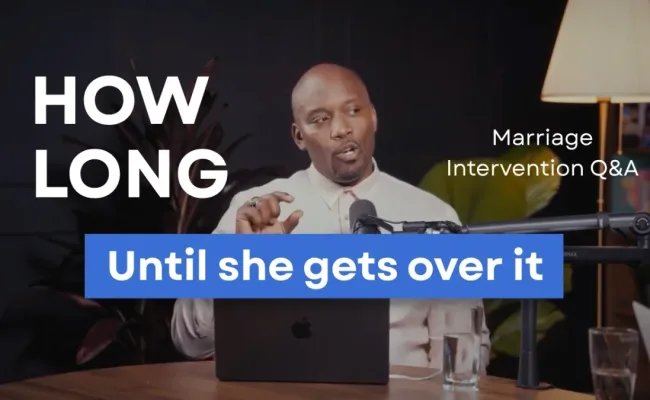
Watch: How long does it take for a betrayed spouse to feel safe again? (Hasani & Danielle Pettiford, Marriage Intervention)
Key takeaways
- Your spouse’s alarm and questions aren’t meant to punish you. They are checking whether it’s safe to trust again.
- How you ended the affair matters. A block with no message can leave the door cracked open.
- Trust is lost in buckets and gained in drops.
- A timeline backfires: you get frustrated, or your spouse feels pressured.
- Radical transparency: check in before your spouse has to ask.
- Accountability shouldn’t turn into a warden-and-prisoner marriage. It should be honest, mutual transparency.
Your spouse isn’t trying to punish you
When you ended the affair, blocked the affair partner and started doing everything you’re supposed to do, it is hard to understand why your spouse still looks at you as the enemy. But constant questioning and alarm aren’t punishment. Underneath them is one question: is it safe yet?
Many betrayed partners live in hypervigilance for a long time. Danielle compares it to the stress of someone who has been through a crisis. Memories, and images they imagined on their own, play without their permission. That is a long road, and it calls for grace and space.
If your spouse’s distress is overwhelming, or they are struggling to function, a licensed mental-health professional can help alongside the work you do as a couple.
How did you end the affair?
Sometimes people do the right thing the wrong way. If you simply blocked the affair partner without a clear message that it is over, that you were wrong, and that you are restoring your marriage, what stops them from texting, liking or calling a few months from now? That crack in the door can keep your spouse from feeling any closure. See how to show your spouse the affair is really over.
Why there isn’t a timeline
When trust is violated, a person loses the ability to feel safe, and safety only comes back as trust is restored. As we often say, trust is lost in buckets and gained in drops. Put a date on it, and either you get frustrated because it is taking too long, or your spouse feels pressured. The better question is what steps you are taking toward healing.
What actually rebuilds safety
Radical transparency
The partner who cheated often wants to get as far from the offense as quickly as possible, and back to life as usual: privacy, the gym, peace of mind. Your spouse is still standing in the rubble. For a while, you can’t go back to life as usual. Let your spouse know where you are, when you’re leaving and coming back, and when plans change.
Check in before you’re asked
Don’t make your spouse do the checking. If you’re serious, check in before they have a chance to ask, and share your plans ahead of time so they don’t have to question.
Patience and empathy
Much of the hurt partner’s healing is work only they can do: calming their own mind and regulating their emotions. You can’t do that for them, but you can have empathy. Many hurt partners say, “I never had to check his phone before. I never cared how long the grocery store took.” That ease is what the affair took from them.
Accountability, not a warden
Some betrayed spouses say, “I don’t want to become that person who checks and asks.” But after a betrayal, the rules have changed, and a system of accountability is part of rebuilding. The goal isn’t a warden-and-prisoner marriage; there is no healing or intimacy in that. The goal is honest, radical transparency between the two of you.
When the same questions keep coming
For a period of time, the questions will keep coming, and that is part of healing: each conversation adds another piece to the puzzle. To keep it from wearing you both out, we encourage couples to record these conversations. It is better to listen to one conversation a hundred times than to have the same conversation a hundred times.
Go deeper
Hasani and Danielle Pettiford’s Becoming Trustworthy Again: How to Earn Back What Your Actions Destroyed is written for the partner who broke trust. See it in our store →
Frequently asked questions
How long does it take a betrayed spouse to feel safe again?
There isn’t a fixed timeline. Safety returns as trust is restored, and trust is lost in buckets and gained in drops. Focus on the steps you are taking, not a date.
Why does my spouse keep asking the same questions?
They are checking whether it is safe to trust you again. Each conversation adds a piece to the puzzle. Recording these conversations can keep you from having the same one over and over.
I blocked the affair partner. Isn’t that enough?
Blocking without a clear message that the affair is over can leave the door open. Many couples end it again together, with an agreed message.
What is radical transparency?
Proactively letting your spouse know where you are, your plans and any changes, before they have to ask, for as long as it takes to rebuild trust.
Will accountability make my spouse a warden?
It shouldn’t. The goal isn’t control; it is honest transparency between the two of you while trust is rebuilt.
Related questions
- How do I know the affair is really over?
- What does accountability after an affair look like?
- How do we rebuild trust?
- If you’re the one who cheated
Get started
Book a free, confidential 30-minute discovery call with Hasani and Danielle. We’ll listen, and tell you honestly what we think the next step is.
Book a free discovery call Call or WhatsApp +1 470-771-6254
Not ready to talk yet? Take the free Affair Recovery Assessment.
Important note: Couples Academy provides relationship coaching, marriage support, and educational resources, not licensed therapy. If you are in immediate danger, experiencing abuse, domestic violence, or a mental health emergency, please contact emergency services or a qualified crisis resource in your area.